
1.3 Gramática: Numbers 0-100
1.3 Gramática: Numbers 0-100
| 0 —cero
1 —uno 2 —dos 3 —tres 4 —cuatro 5 —cinco 6 —seis 7 —siete 8 —ocho 9 —nueve 10 –diez |
Eleven through fifteen are different
| 11 —once
12 —doce 13 —trece 14 —catorce 15 —quince |
Watch the pattern from 16-19: dieci + number
| 16 —dieciséis
17 —diecisiete 18 —dieciocho 19 —diecinueve |
The -e in veinte changes to an “i” when connecting a 1-9 number.
| 20 —veinte 25 —veinticinco
21 —veintiuno** 26 —veintiséis 22 —veintidós 27 —veintisiete 23 —veintitrés 28 —veintiocho 24 —veinticuatro 29 —veintinueve
|
| **UNO and all combinations (21=veintiuno, 31= treinta y uno, etc.) become UN before a masculine noun:
Ejemplo: Veintiún libros = twenty one books |
| Treinta y un libros = thirty one books |
From 30 to 99 things get easier: Thirty and one, thirty and two. . .thirty and nine. . .etc. This pattern continues until ninety and nine. However, when you pronounce them, it sounds like one word.
| 30 —treinta 40 —cuarenta
31 —treinta y uno** 50 —cincuenta 32 —treinta y dos 60 —sesenta 33 —treinta y tres 70 —setenta 34 —treinta y cuatro 80 —ochenta 35 —treinta y cinco 90 —noventa 36 —treinta y seis 100 —cien* 37 —treinta y siete 38 —treinta y ocho 39 —treinta y nueve *Cien works for 100 “on the dot” only. We will see larger numbers later, however after 100 (101, 105, 120 etc), “hundred” becomes “ciento.” |
 ACTIVIDAD # 1
Los números de teléfono. Phone numbers. In the Spanish-speaking world, a common way to say phone numbers is to state the first number as a SINGLE DIGIT, and then state three DOUBLE-DIGIT numbers for the rest.
Completar. Write down the following telephone numbers in Spanish:
Ejemplo: María: (480) 461-7859 4-80 4-61-78-59
cuatro-ochenta- cuatro-sesenta y uno-setenta y ocho-cincuenta y nueve.
1. Arturo: (480) 6-31-87-20
2. Pedro: (602) 7-40-21-18
3. Susana: (480) 9-12-56-67
4. Lalo: (602) 1-76-12-99
5. Ana: (923) 4-25-11-34
6. Mi número de teléfono es. . .
CUÁNTOS before masculine nouns and CUÁNTAS before feminine nouns are used to ask how many people or things there are.Ejemplo: ¿Cuántas sillas hay en la clase? How many chairs are there in the class? |
ACTIVIDAD # 2
¿Cuántos hay? Look at the pictures and write how many persons or things there are in the following drawings. Use HAY + number + noun



1._______________ 2.________________ 3._________________ 4.__________________
 ACTIVIDAD # 3
ESCUCHAR. Los números. Write the number you hear.
Ejemplo:
a. 25__
b. _____
c. ____
d. ____
e.____
f. ____
¡Inténtalo!
Now, write out the numbers to check your work.
ACTIVIDAD # 4
Use the pictures to fill in the blanks with the correct number in Spanish. Spell the number. If you need a written accent, copy the letter from here: á é í ó ú
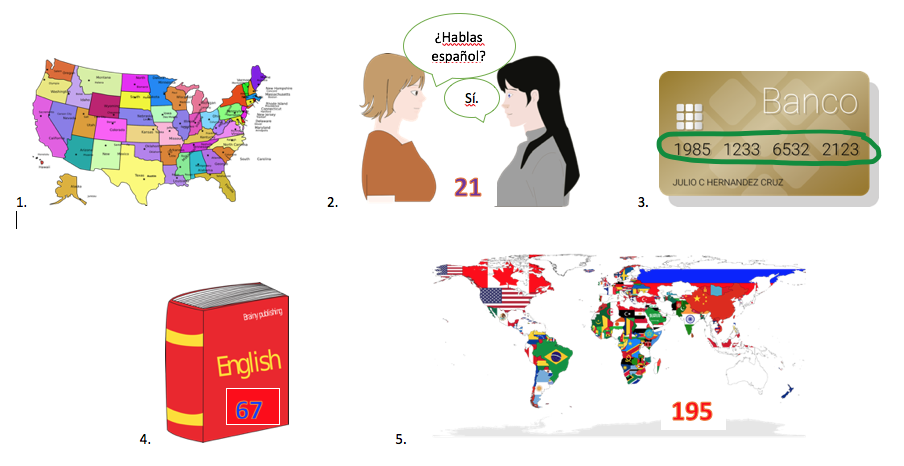
1. Hay ____________estados (states) en Los Estados Unidos.
2. ______________ países (countries) hablan español.
3. Hay por lo general, ___________números en una tarjeta de crédito (credit card).
4. El inglés es el idioma (language) oficial en __________________ países.
5. La ONU reconoce (the UN recognizes) __________________países en el mundo en 2020.
¡Inténtalo!
 ACTIVIDAD # 5
En la clase. With a partner, take turns asking and answering the following
questions.
Possible answers:
Hay ____________.
Sí hay ___________. No, no hay _____________.
- ¿Cuántos estudiantes hay en la clase?
- ¿Cuántos profesores hay en la clase?
- ¿Qué hay en tu (your) mochila?
- ¿Hay niños en la clase?
- ¿Cuántas mujeres hay?
- ¿Hay hombres?
- ¿Cuántas computadoras hay en la clase?
NOTE: In Spanish, we use the verb TENER to talk about age.
Ejemplo: ¿Cuántos años TIENES? How old are you?
TENGO dieciocho años. I am eighteen years old.
¿Cuántos años TIENE (usted)? How old are you?
TENGO cincuenta años. I am fifty years old.