
12: Altruism
Helping and Prosocial Behavior
By Dennis L. Poepsel and David A. Schroeder Truman State University, University of Arkansas
People often act to benefit other people, and these acts are examples of prosocial behavior. Such behaviors may come in many guises: helping an individual in need; sharing personal resources; volunteering time, effort, and expertise; cooperating with others to achieve some common goals. The focus of this module is on helping—prosocial acts in dyadic situations in which one person is in need and another provides the necessary assistance to eliminate the other’s need. Although people are often in need, help is not always given. Why not? The decision of whether or not to help is not as simple and straightforward as it might seem, and many factors need to be considered by those who might help. In this module, we will try to understand how the decision to help is made by answering the question: Who helps when and why?
Learning Objectives
- Learn which situational and social factors affect when a bystander will help another in need.
- Understand which personality and individual difference factors make some people more likely to help than others.
- Discover whether we help others out of a sense of altruistic concern for the victim, for more self-centered and egoistic motives, or both.
Introduction
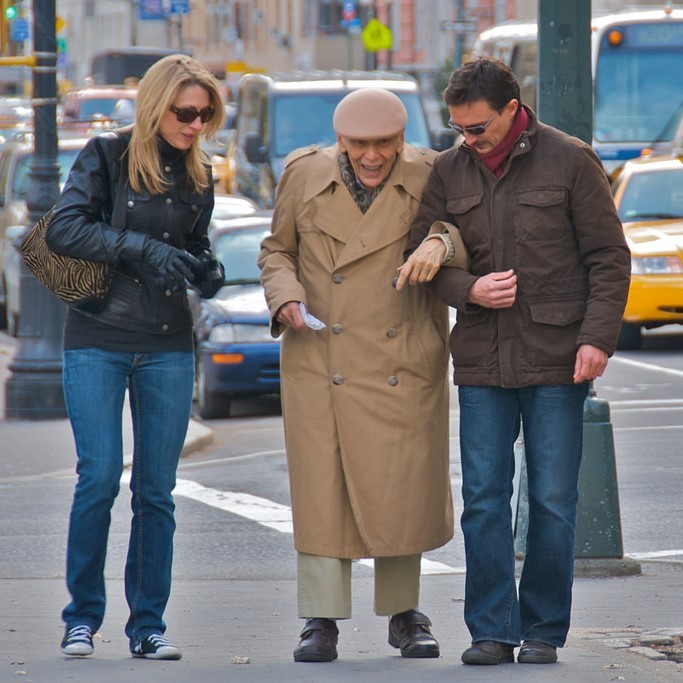
Go to YouTube and search for episodes of “Primetime: What Would You Do?” You will find video segments in which apparently innocent individuals are victimized, while onlookers typically fail to intervene. The events are all staged, but they are very real to the bystanders on the scene. The entertainment offered is the nature of the bystanders’ responses, and viewers are outraged when bystanders fail to intervene. They are convinced that they would have helped. But would they? Viewers are overly optimistic in their beliefs that they would play the hero. Helping may occur frequently, but help is not always given to those in need. So when do people help, and when do they not? All people are not equally helpful—who helps? Why would a person help another in the first place? Many factors go into a person’s decision to help—a fact that the viewers do not fully appreciate. This module will answer the question: Who helps when and why?
When Do People Help?
Social psychologists are interested in answering this question because it is apparent that people vary in their tendency to help others. In 2010 for instance, Hugo Alfredo Tale-Yax was stabbed when he apparently tried to intervene in an argument between a man and woman. As he lay dying in the street, only one man checked his status, but many others simply glanced at the scene and continued on their way. (One passerby did stop to take a cellphone photo, however.) Unfortunately, failures to come to the aid of someone in need are not unique, as the segments on “What Would You Do?” show. Help is not always forthcoming for those who may need it the most. Trying to understand why people do not always help became the focus of bystander intervention research (e.g., Latané & Darley, 1970).
To answer the question regarding when people help, researchers have focused on
- how bystanders come to define emergencies,
- when they decide to take responsibility for helping, and
- how the costs and benefits of intervening affect their decisions of whether to help.
Defining the situation: The role of pluralistic ignorance
The decision to help is not a simple yes/no proposition. In fact, a series of questions must be addressed before help is given—even in emergencies in which time may be of the essence. Sometimes help comes quickly; an onlooker recently jumped from a Philadelphia subway platform to help a stranger who had fallen on the track. Help was clearly needed and was quickly given. But some situations are ambiguous, and potential helpers may have to decide whether a situation is one in which help, in fact, needs to be given.
To define ambiguous situations (including many emergencies), potential helpers may look to the action of others to decide what should be done. But those others are looking around too, also trying to figure out what to do. Everyone is looking, but no one is acting! Relying on others to define the situation and to then erroneously conclude that no intervention is necessary when help is actually needed is called pluralistic ignorance (Latané & Darley, 1970). When people use the inactions of others to define their own course of action, the resulting pluralistic ignorance leads to less help being given.
Do I have to be the one to help?: Diffusion of responsibility
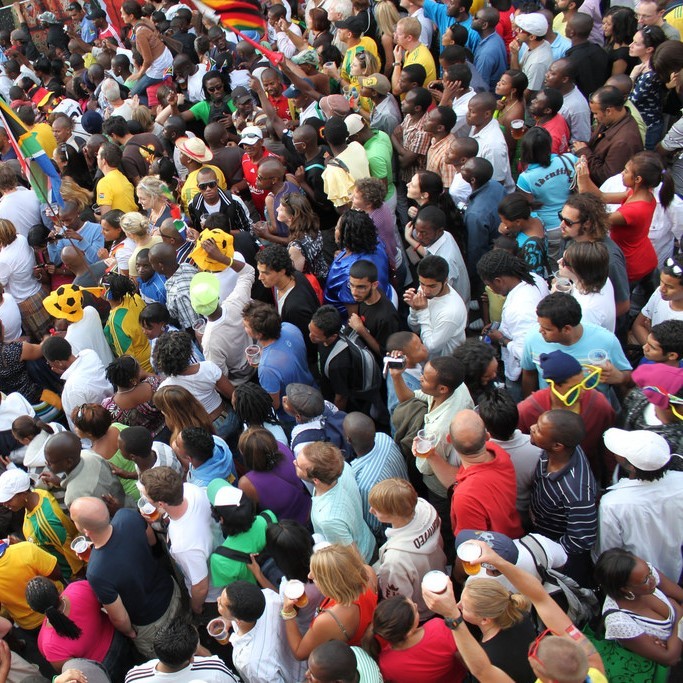
Simply being with others may facilitate or inhibit whether we get involved in other ways as well. In situations in which help is needed, the presence or absence of others may affect whether a bystander will assume personal responsibility to give the assistance. If the bystander is alone, personal responsibility to help falls solely on the shoulders of that person. But what if others are present? Although it might seem that having more potential helpers around would increase the chances of the victim getting help, the opposite is often the case. Knowing that someone else could help seems to relieve bystanders of personal responsibility, so bystanders do not intervene. This phenomenon is known as diffusion of responsibility (Darley & Latané, 1968).
On the other hand, watch the video of the race officials following the 2013 Boston Marathon after two bombs exploded as runners crossed the finish line. Despite the presence of many spectators, the yellow-jacketed race officials immediately rushed to give aid and comfort to the victims of the blast. Each one no doubt felt a personal responsibility to help by virtue of their official capacity in the event; fulfilling the obligations of their roles overrode the influence of the diffusion of responsibility effect.
There is an extensive body of research showing the negative impact of pluralistic ignorance and diffusion of responsibility on helping (Fisher et al., 2011), in both emergencies and everyday need situations. These studies show the tremendous importance potential helpers place on the social situation in which unfortunate events occur, especially when it is not clear what should be done and who should do it. Other people provide important social information about how we should act and what our personal obligations might be. But does knowing a person needs help and accepting responsibility to provide that help mean the person will get assistance? Not necessarily.
The costs and rewards of helping
The nature of the help needed plays a crucial role in determining what happens next. Specifically, potential helpers engage in a cost–benefit analysis before getting involved (Dovidio et al., 2006). If the needed help is of relatively low cost in terms of time, money, resources, or risk, then help is more likely to be given. Lending a classmate a pencil is easy; confronting someone who is bullying your friend is an entirely different matter. As the unfortunate case of Hugo Alfredo Tale-Yax demonstrates, intervening may cost the life of the helper.
The potential rewards of helping someone will also enter into the equation, perhaps offsetting the cost of helping. Thanks from the recipient of help may be a sufficient reward. If helpful acts are recognized by others, helpers may receive social rewards of praise or monetary rewards. Even avoiding feelings of guilt if one does not help may be considered a benefit. Potential helpers consider how much helping will cost and compare those costs to the rewards that might be realized; it is the economics of helping. If costs outweigh the rewards, helping is less likely. If rewards are greater than cost, helping is more likely.
Who Helps?
Do you know someone who always seems to be ready, willing, and able to help? Do you know someone who never helps out? It seems there are personality and individual differences in the helpfulness of others. To answer the question of who chooses to help, researchers have examined 1) the role that sex and gender play in helping, 2) what personality traits are associated with helping, and 3) the characteristics of the “prosocial personality.”
Who are more helpful—men or women?

In terms of individual differences that might matter, one obvious question is whether men or women are more likely to help. In one of the “What Would You Do?” segments, a man takes a woman’s purse from the back of her chair and then leaves the restaurant. Initially, no one responds, but as soon as the woman asks about her missing purse, a group of men immediately rush out the door to catch the thief. So, are men more helpful than women? The quick answer is “not necessarily.” It all depends on the type of help needed. To be very clear, the general level of helpfulness may be pretty much equivalent between the sexes, but men and women help in different ways (Becker & Eagly, 2004; Eagly & Crowley, 1986). What accounts for these differences?
Two factors help to explain sex and gender differences in helping. The first is related to the cost–benefit analysis process discussed previously. Physical differences between men and women may come into play (e.g., Wood & Eagly, 2002); the fact that men tend to have greater upper body strength than women makes the cost of intervening in some situations less for a man. Confronting a thief is a risky proposition, and some strength may be needed in case the perpetrator decides to fight. A bigger, stronger bystander is less likely to be injured and more likely to be successful.
The second explanation is simple socialization. Men and women have traditionally been raised to play different social roles that prepare them to respond differently to the needs of others, and people tend to help in ways that are most consistent with their gender roles. Female gender roles encourage women to be compassionate, caring, and nurturing; male gender roles encourage men to take physical risks, to be heroic and chivalrous, and to be protective of those less powerful. As a consequence of social training and the gender roles that people have assumed, men may be more likely to jump onto subway tracks to save a fallen passenger, but women are more likely to give comfort to a friend with personal problems (Diekman & Eagly, 2000; Eagly & Crowley, 1986). There may be some specialization in the types of help given by the two sexes, but it is nice to know that there is someone out there—man or woman—who is able to give you the help that you need, regardless of what kind of help it might be.
A trait for being helpful: Agreeableness
Graziano and his colleagues (e.g., Graziano & Tobin, 2009; Graziano, Habishi, Sheese, & Tobin, 2007) have explored how agreeableness—one of the Big Five personality dimensions (e.g., Costa & McCrae, 1988)—plays an important role in prosocial behavior. Agreeableness is a core trait that includes such dispositional characteristics as being sympathetic, generous, forgiving, and helpful, and behavioral tendencies toward harmonious social relations and likeability. At the conceptual level, a positive relationship between agreeableness and helping may be expected, and research by Graziano et al. (2007) has found that those higher on the agreeableness dimension are, in fact, more likely than those low on agreeableness to help siblings, friends, strangers, or members of some other group. Agreeable people seem to expect that others will be similarly cooperative and generous in interpersonal relations, and they, therefore, act in helpful ways that are likely to elicit positive social interactions.
Searching for the prosocial personality
Rather than focusing on a single trait, Penner and his colleagues (Penner, Fritzsche, Craiger, & Freifeld, 1995; Penner & Orom, 2010) have taken a somewhat broader perspective and identified what they call the prosocial personality orientation. Their research indicates that two major characteristics are related to the prosocial personality and prosocial behavior. The first characteristic is called other-oriented empathy: People high on this dimension have a strong sense of social responsibility, empathize with and feel emotionally tied to those in need, understand the problems the victim is experiencing, and have a heightened sense of moral obligation to be helpful. This factor has been shown to be highly correlated with the trait of agreeableness discussed previously. The second characteristic, helpfulness, is more behaviorally oriented. Those high on the helpfulness factor have been helpful in the past, and because they believe they can be effective with the help they give, they are more likely to be helpful in the future.
Why Help?
Finally, the question of why a person would help needs to be asked. What motivation is there for that behavior? Psychologists have suggested that 1) evolutionary forces may serve to predispose humans to help others, 2) egoistic concerns may determine if and when help will be given, and 3) selfless, altruistic motives may also promote helping in some cases.
Evolutionary roots for prosocial behavior

Our evolutionary past may provide keys about why we help (Buss, 2004). Our very survival was no doubt promoted by the prosocial relations with clan and family members, and, as a hereditary consequence, we may now be especially likely to help those closest to us—blood-related relatives with whom we share a genetic heritage. According to evolutionary psychology, we are helpful in ways that increase the chances that our DNA will be passed along to future generations (Burnstein, Crandall, & Kitayama, 1994)—the goal of the “selfish gene” (Dawkins, 1976). Our personal DNA may not always move on, but we can still be successful in getting some portion of our DNA transmitted if our daughters, sons, nephews, nieces, and cousins survive to produce offspring. The favoritism shown for helping our blood relatives is called kin selection (Hamilton, 1964).
But, we do not restrict our relationships just to our own family members. We live in groups that include individuals who are unrelated to us, and we often help them too. Why? Reciprocal altruism (Trivers, 1971) provides the answer. Because of reciprocal altruism, we are all better off in the long run if we help one another. If helping someone now increases the chances that you will be helped later, then your overall chances of survival are increased. There is the chance that someone will take advantage of your help and not return your favors. But people seem predisposed to identify those who fail to reciprocate, and punishments including social exclusion may result (Buss, 2004). Cheaters will not enjoy the benefit of help from others, reducing the likelihood of the survival of themselves and their kin.
Evolutionary forces may provide a general inclination for being helpful, but they may not be as good an explanation for why we help in the here and now. What factors serve as proximal influences for decisions to help?
Egoistic motivation for helping
Most people would like to think that they help others because they are concerned about the other person’s plight. In truth, the reasons why we help may be more about ourselves than others: Egoistic or selfish motivations may make us help. Implicitly, we may ask, “What’s in it for me?” There are two major theories that explain what types of reinforcement helpers may be seeking. The negative state relief model (e.g., Cialdini, Darby, & Vincent, 1973; Cialdini, Kenrick, & Baumann, 1982) suggests that people sometimes help in order to make themselves feel better. Whenever we are feeling sad, we can use helping someone else as a positive mood boost to feel happier. Through socialization, we have learned that helping can serve as a secondary reinforcement that will relieve negative moods (Cialdini & Kenrick, 1976).
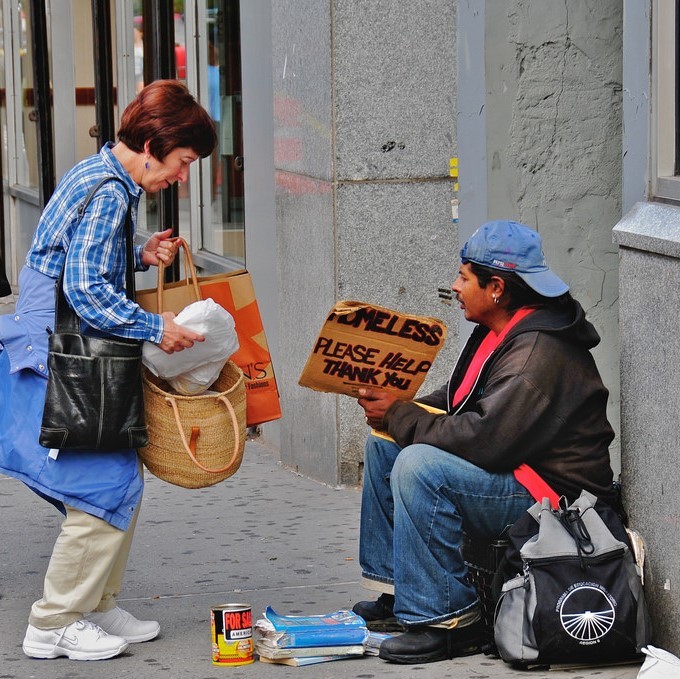
The arousal: cost–reward model provides an additional way to understand why people help (e.g., Piliavin, Dovidio, Gaertner, & Clark, 1981). This model focuses on the aversive feelings aroused by seeing another in need. If you have ever heard an injured puppy yelping in pain, you know that feeling, and you know that the best way to relieve that feeling is to help and to comfort the puppy. Similarly, when we see someone who is suffering in some way (e.g., injured, homeless, hungry), we vicariously experience a sympathetic arousal that is unpleasant, and we are motivated to eliminate that aversive state. One way to do that is to help the person in need. By eliminating the victim’s pain, we eliminate our own aversive arousal. Helping is an effective way to alleviate our own discomfort.
As an egoistic model, the arousal: cost–reward model explicitly includes the cost/reward considerations that come into play. Potential helpers will find ways to cope with the aversive arousal that will minimize their costs—maybe by means other than direct involvement. For example, the costs of directly confronting a knife-wielding assailant might stop a bystander from getting involved, but the cost of some indirect help (e.g., calling the police) may be acceptable. In either case, the victim’s need is addressed. Unfortunately, if the costs of helping are too high, bystanders may reinterpret the situation to justify not helping at all. For some, fleeing the situation causing their distress may do the trick (Piliavin et al., 1981).
The egoistically based negative state relief model and the arousal: cost–reward model see the primary motivation for helping as being the helper’s own outcome. Recognize that the victim’s outcome is of relatively little concern to the helper—benefits to the victim are incidental byproducts of the exchange (Dovidio et al., 2006). The victim may be helped, but the helper’s real motivation according to these two explanations is egoistic: Helpers help to the extent that it makes them feel better.
Altruistic help
Although many researchers believe that egoism is the only motivation for helping, others suggest that altruism—helping that has as its ultimate goal the improvement of another’s welfare—may also be a motivation for helping under the right circumstances. Batson (2011) has offered the empathy–altruism model to explain altruistically motivated helping for which the helper expects no benefits. According to this model, the key for altruism is empathizing with the victim, that is, putting oneself in the shoes of the victim and imagining how the victim must feel. When taking this perspective and having empathic concern, potential helpers become primarily interested in increasing the well-being of the victim, even if the helper must incur some costs that might otherwise be easily avoided. The empathy–altruism model does not dismiss egoistic motivations; helpers not empathizing with a victim may experience personal distress and have an egoistic motivation, not unlike the feelings and motivations explained by the arousal: cost–reward model. Because egoistically motivated individuals are primarily concerned with their own cost–benefit outcomes, they are less likely to help if they think they can escape the situation with no costs to themselves. In contrast, altruistically motivated helpers are willing to accept the cost of helping to benefit a person with whom they have empathized—this “self-sacrificial” approach to helping is the hallmark of altruism (Batson, 2011).
Although there is still some controversy about whether people can ever act for purely altruistic motives, it is important to recognize that, while helpers may derive some personal rewards by helping another, the help that has been given is also benefitting someone who was in need. The residents who offered food, blankets, and shelter to stranded runners who were unable to get back to their hotel rooms because of the Boston Marathon bombing undoubtedly received positive rewards because of the help they gave, but those stranded runners who were helped got what they needed badly as well. “In fact, it is quite remarkable how the fates of people who have never met can be so intertwined and complementary. Your benefit is mine; and mine is yours” (Dovidio et al., 2006, p. 143).
Conclusion
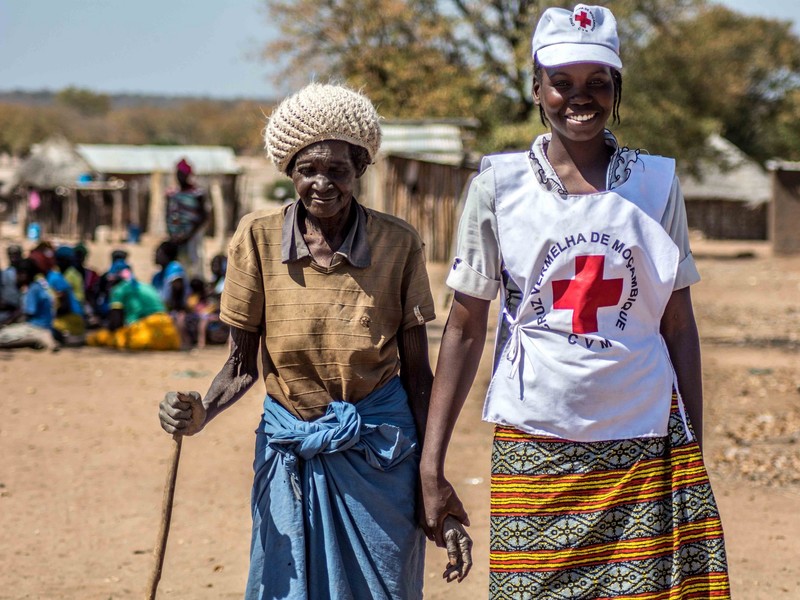
We started this module by asking the question, “Who helps when and why?” As we have shown, the question of when help will be given is not quite as simple as the viewers of “What Would You Do?” believe. The power of the situation that operates on potential helpers in real time is not fully considered. What might appear to be a split-second decision to help is actually the result of consideration of multiple situational factors (e.g., the helper’s interpretation of the situation, the presence and ability of others to provide the help, the results of a cost–benefit analysis) (Dovidio et al., 2006). We have found that men and women tend to help in different ways—men are more impulsive and physically active, while women are more nurturing and supportive. Personality characteristics such as agreeableness and the prosocial personality orientation also affect people’s likelihood of giving assistance to others. And, why would people help in the first place? In addition to evolutionary forces (e.g., kin selection, reciprocal altruism), there is extensive evidence to show that helping and prosocial acts may be motivated by selfish, egoistic desires; by selfless, altruistic goals; or by some combination of egoistic and altruistic motives. (For a fuller consideration of the field of prosocial behavior, we refer you to Dovidio et al. [2006].)
Test your Understanding
Vocabulary
- Agreeableness
- A core personality trait that includes such dispositional characteristics as being sympathetic, generous, forgiving, and helpful, and behavioral tendencies toward harmonious social relations and likeability.
- Altruism
- A motivation for helping that has the improvement of another’s welfare as its ultimate goal, with no expectation of any benefits for the helper.
- Arousal: cost–reward model
- An egoistic theory proposed by Piliavin et al. (1981) that claims that seeing a person in need leads to the arousal of unpleasant feelings, and observers are motivated to eliminate that aversive state, often by helping the victim. A cost–reward analysis may lead observers to react in ways other than offering direct assistance, including indirect help, reinterpretation of the situation, or fleeing the scene.
- Bystander intervention
- The phenomenon whereby people intervene to help others in need even if the other is a complete stranger and the intervention puts the helper at risk.
- Cost–benefit analysis
- A decision-making process that compares the cost of an action or thing against the expected benefit to help determine the best course of action.
- Diffusion of responsibility
- When deciding whether to help a person in need, knowing that there are others who could also provide assistance relieves bystanders of some measure of personal responsibility, reducing the likelihood that bystanders will intervene.
- Egoism
- A motivation for helping that has the improvement of the helper’s own circumstances as its primary goal.
- Empathic concern
- According to Batson’s empathy–altruism hypothesis, observers who empathize with a person in need (that is, put themselves in the shoes of the victim and imagine how that person feels) will experience empathic concern and have an altruistic motivation for helping.
- Empathy–altruism model
- An altruistic theory proposed by Batson (2011) that claims that people who put themselves in the shoes of a victim and imagining how the victim feel will experience empathic concern that evokes an altruistic motivation for helping.
- Helpfulness
- A component of the prosocial personality orientation; describes individuals who have been helpful in the past and, because they believe they can be effective with the help they give, are more likely to be helpful in the future.
- Helping
- Prosocial acts that typically involve situations in which one person is in need and another provides the necessary assistance to eliminate the other’s need.
- Kin selection
- According to evolutionary psychology, the favoritism shown for helping our blood relatives, with the goals of increasing the likelihood that some portion of our DNA will be passed on to future generations.
- Negative state relief model
- An egoistic theory proposed by Cialdini et al. (1982) that claims that people have learned through socialization that helping can serve as a secondary reinforcement that will relieve negative moods such as sadness.
- Other-oriented empathy
- A component of the prosocial personality orientation; describes individuals who have a strong sense of social responsibility, empathize with and feel emotionally tied to those in need, understand the problems the victim is experiencing, and have a heightened sense of moral obligations to be helpful.
- Personal distress
- According to Batson’s empathy–altruism hypothesis, observers who take a detached view of a person in need will experience feelings of being “worried” and “upset” and will have an egoistic motivation for helping to relieve that distress.
- Pluralistic ignorance
- Relying on the actions of others to define an ambiguous need situation and to then erroneously conclude that no help or intervention is necessary.
- Social behavior that benefits another person.
- A measure of individual differences that identifies two sets of personality characteristics (other-oriented empathy, helpfulness) that are highly correlated with prosocial behavior.
- Reciprocal altruism
- According to evolutionary psychology, a genetic predisposition for people to help those who have previously helped them.
References
- Batson, C. D. (2011). Altruism in humans. New York, NY: Oxford University Press.
- Becker, S. W., & Eagly, A. H. (2004). The heroism of women and men. American Psychologist, 59, 163–178.
- Burnstein, E., Crandall, C., & Kitayama, S. (1994). Some neo-Darwinian decision rules for altruism: Weighing cues for inclusive fitness as a function of the biological importance of the decision. Journal of Personality and Social Psychology, 67, 773–789.
- Buss, D. M. (2004). Evolutionary psychology: The new science of the mind. Boston, MA: Allyn Bacon.
- Cialdini, R. B., & Kenrick, D. T. (1976). Altruism as hedonism: A social developmental perspective on the relationship of negative mood state and helping. Journal of Personality and Social Psychology, 34, 907–914.
- Cialdini, R. B., Darby, B. K. & Vincent, J. E. (1973). Transgression and altruism: A case for hedonism. Journal of Experimental Social Psychology, 9, 502–516.
- Cialdini, R. B., Kenrick, D. T., & Baumann, D. J. (1982). Effects of mood on prosocial behavior in children and adults. In N. Eisenberg (Ed.), The development of prosocial behavior (pp. 339–359). New York, NY: Academic Press.
- Costa, P. T., & McCrae, R. R. (1998). Trait theories in personality. In D. F. Barone, M. Hersen, & V. B. Van Hasselt (Eds.), Advanced Personality (pp. 103–121). New York, NY: Plenum.
- Darley, J. M. & Latané, B. (1968). Bystander intervention in emergencies: Diffusion of responsibility. Journal of Personality and Social Psychology, 8, 377–383.
- Dawkins, R. (1976). The selfish gene. Oxford, U.K.: Oxford University Press.
- Diekman, A. B., & Eagly, A. H. (2000). Stereotypes as dynamic structures: Women and men of the past, present, and future. Personality and Social Psychology Bulletin, 26, 1171–1188.
- Dovidio, J. F., Piliavin, J. A., Schroeder, D. A., & Penner, L. A. (2006). The social psychology of prosocial behavior. Mahwah, NJ: Erlbaum.
- Eagly, A. H., & Crowley, M. (1986). Gender and helping behavior: A meta-analytic review of the social psychological literature. Psychological Review, 66, 183–201.
- Fisher, P., Krueger, J. I., Greitemeyer, T., Vogrincie, C., Kastenmiller, A., Frey, D., Henne, M., Wicher, M., & Kainbacher, M. (2011). The bystander-effect: A meta-analytic review of bystander intervention in dangerous and non-dangerous emergencies. Psychological Bulletin, 137, 517–537.
- Graziano, W. G., & Tobin, R. (2009). Agreeableness. In M. R. Leary & R. H. Hoyle (Eds.), Handbook of Individual Differences in Social Behavior. New York, NY: Guilford Press.
- Graziano, W. G., Habashi, M. M., Sheese, B. E., & Tobin, R. M. (2007). Agreeableness, empathy, and helping: A person x situation perspective. Journal of Personality and Social Psychology, 93, 583–599.
- Hamilton, W. D. (1964). The genetic evolution of social behavior. Journal of Theoretical Biology, 7, 1–52.
- Latané, B., & Darley, J. M. (1970). The unresponsive bystander: Why doesn’t he help? New York, NY: Appleton-Century-Crofts.
- Penner, L. A., & Orom, H. (2010). Enduring goodness: A Person X Situation perspective on prosocial behavior. In M. Mikuliner & P.R. Shaver, P.R. (Eds.), Prosocial motives, emotions, and behavior: The better angels of our nature (pp. 55–72). Washington, DC: American Psychological Association.
- Penner, L. A., Fritzsche, B. A., Craiger, J. P., & Freifeld, T. R. (1995). Measuring the prosocial personality. In J. Butcher & C.D. Spielberger (Eds.), Advances in personality assessment (Vol. 10, pp. 147–163). Hillsdale, NJ: Erlbaum.
- Piliavin, J. A., Dovidio, J. F., Gaertner, S. L., & Clark, R. D., III (1981). Emergency intervention. New York, NY: Academic Press.
- Trivers, R. (1971). The evolution of reciprocal altruism. Quarterly Review of Biology, 46, 35–57.
- Wood, W., & Eagly, A. H. (2002). A cross-cultural analysis of the behavior of women and men: Implications for the origins of sex differences. Psychological Bulletin, 128, 699–727.
The phenomenon whereby people intervene to help others in need even if the other is a complete stranger and the intervention puts the helper at risk.
Prosocial acts that typically involve situations in which one person is in need and another provides the necessary assistance to eliminate the other’s need.
Relying on the actions of others to define an ambiguous need situation and to then erroneously conclude that no help or intervention is necessary.
When deciding whether to help a person in need, knowing that there are others who could also provide assistance relieves bystanders of some measure of personal responsibility, reducing the likelihood that bystanders will intervene.
A decision-making process that compares the cost of an action or thing against the expected benefit to help determine the best course of action.
A core personality trait that includes such dispositional characteristics as being sympathetic, generous, forgiving, and helpful, and behavioral tendencies toward harmonious social relations and likeability.
Social behavior that benefits another person.
A measure of individual differences that identifies two sets of personality characteristics (other-oriented empathy, helpfulness) that are highly correlated with prosocial behavior.
A component of the prosocial personality orientation; describes individuals who have a strong sense of social responsibility, empathize with and feel emotionally tied to those in need, understand the problems the victim is experiencing, and have a heightened sense of moral obligations to be helpful.
A component of the prosocial personality orientation; describes individuals who have been helpful in the past and, because they believe they can be effective with the help they give, are more likely to be helpful in the future.
According to evolutionary psychology, the favoritism shown for helping our blood relatives, with the goals of increasing the likelihood that some portion of our DNA will be passed on to future generations.
According to evolutionary psychology, a genetic predisposition for people to help those who have previously helped them.
An egoistic theory proposed by Cialdini et al. (1982) that claims that people have learned through socialization that helping can serve as a secondary reinforcement that will relieve negative moods such as sadness.
An egoistic theory proposed by Piliavin et al. (1981) that claims that seeing a person in need leads to the arousal of unpleasant feelings, and observers are motivated to eliminate that aversive state, often by helping the victim. A cost–reward analysis may lead observers to react in ways other than offering direct assistance, including indirect help, reinterpretation of the situation, or fleeing the scene.
A motivation for helping that has the improvement of the helper’s own circumstances as its primary goal.
A motivation for helping that has the improvement of another’s welfare as its ultimate goal, with no expectation of any benefits for the helper.
An altruistic theory proposed by Batson (2011) that claims that people who put themselves in the shoes of a victim and imagining how the victim feel will experience empathic concern that evokes an altruistic motivation for helping.
According to Batson’s empathy–altruism hypothesis, observers who empathize with a person in need (that is, put themselves in the shoes of the victim and imagine how that person feels) will experience empathic concern and have an altruistic motivation for helping.
According to Batson’s empathy–altruism hypothesis, observers who take a detached view of a person in need will experience feelings of being “worried” and “upset” and will have an egoistic motivation for helping to relieve that distress.