
Emotions and Culture
As you might expect (after reading about the components of emotion), people tend to respond similarly in terms of physiological (or bodily) expression. Also, our ability to recognize and produce facial expressions of emotion appears to be universal. Research conducted with individuals born blind at birth found that the same facial expression of emotions were produced (smiling when happy, frowning when sad), despite these individuals never having the opportunity to observe these facial displays of emotion in other people. This suggests that facial muscles movements involved in generating emotional expressions is universal and not the result of learned behavior. Charles Darwin’s book The Expression of Emotions in Man and Animals (1872) very similar morphology in the facial expressions of non-human primates like chimpanzees and orangutans to human facial expressions. In fact, there is substantial evidence for seven universal emotions that are each associated with distinct facial expressions. These include: happiness, surprise, sadness, fright, disgust, contempt, and anger (Ekman & Keltner, 1997).
Ekman and Friesen (1972) conducted one of the first scientific studies of emotion which raised important questions about the role of culture in shaping universal components of emotion. Ekman and Friesen then took photos of people posing with these different expressions (Figure 1). With the help of colleagues at different universities around the world, Ekman and Friesen showed these pictures to members of vastly different cultures, gave them a list of emotion words (translated into the relevant languages) and asked them to match the facial expressions in the photos with their corresponding emotion words on the list (Ekman & Friesen, 1971; Ekman et al., 1987).

Across cultures, participants matched each picture to the same emotion word at levels greater than chance. This led Ekman and his colleagues to conclude that there are universally recognized emotional facial expressions.
- Happiness
- Surprise
- Sadness
- Fright
- Disgust
- Contempt
- Anger (Ekman & Keltner, 1997).
At the same time, Ekman and Friesen found considerable variability across cultures in recognition rates. For instance, 95% of participants in the United States associated a smile with happiness, only 69% of Sumatran participants made the same association. Similarly, 86% of participants in the United States associated wrinkling of the nose with disgust, but only 60% of Japanese made the same association with a wrinkled nose (Ekman et al., 1987). Ekman and colleagues interpreted this variation as demonstrating cultural differences in the way that people show or display emotion (Ekman, 1972).
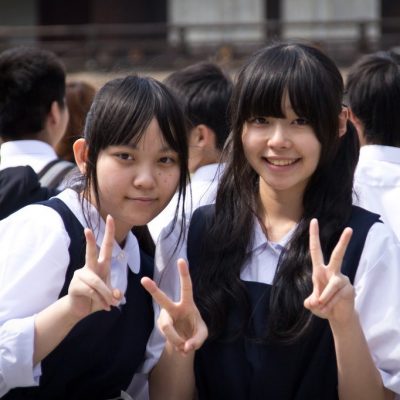
Cultural display rules are a collection of culturally specific standards that govern the type and frequency of emotional displays that are socially acceptable (Malatesta & Haviland, 1982). In the United States we are taught that “big boys don’t cry” or we laugh at our boss’s jokes even though we don’t think they are funny.
A more recent study simultaneously studied physiological responses and facial expressions and found that regardless of culture, people tend to respond similarly in terms of physiological (or bodily) expression. European American and Hmong (pronounced “muhng”) American participants were asked to relive various emotional episodes in their lives (e.g., when they lost something or someone they loved; when something good happened) (Tsai, Chentsova-Dutton, Freire-Bebeau, & Przymus, 2002). At the level of physiological arousal (e.g., heart rate), there were no differences in how the participants responded but their facial expressive behavior told a different story.
When reliving events that elicited happiness, pride, and love, European Americans smiled more frequently and more intensely than did their Hmong counterparts—though all participants reported feeling happy, proud, and in love at similar levels of intensity. And similar patterns have emerged in studies comparing European Americans with Chinese Americans during different emotion-eliciting tasks (Tsai et al., 2002; Tsai, Levenson, & McCoy, 2006; Tsai, Levenson, & Carstensen, 2000). While the physiological aspects of emotional responses appear to be similar across cultures, their accompanying facial expressions are more culturally distinctive.
By affecting how individuals express their emotions, culture also influences how people experience them as well. In the United States it is acceptable to express negative emotions like fear, anger, and disgust both alone and in the presence of others, while Japanese individuals only do so while alone (Matsumoto, 1990). Matsumoto, Yoo and Nakagawa (2008) found that individuals from collectivist cultures were more likely to engage in suppression of emotional reaction so they can evaluate which response is most appropriate in a given context (Matsumoto, Yoo, & Nakagawa, 2008).
Increasing research has demonstrated cultural differences not only in display rules, but also the degree to which people focus on the face rather than other aspects of the social context (Masuda, Ellsworth, Mesquita, Leu, Tanida, & Van de Veerdonk, 2008), and on different features of the face (Yuki, Maddux, & Matsuda, 2007) when perceiving others’ emotions. For example, people from the United States tend to focus on the mouth when interpreting others’ emotions, whereas people from Japan tend to focus on the eyes. Cultural differences exist when evaluating and interpreting emotional experiences that underlie facial expressions of emotion but there is a distinct in-group advantage. Individuals from the same culture to will recognize the emotions of others of the same culture somewhat better than those from a different culture.
Our culturally moderated emotions can help us engage in socially appropriate behaviors, as defined by our cultures, and avoid cultural miscommunication. Matsumoto argues (2018) that without display rules it would be very difficult for groups and societies to function effectively, and even for humans to survive as a species, if emotions were not regulated in culturally defined ways for the common, social good.